
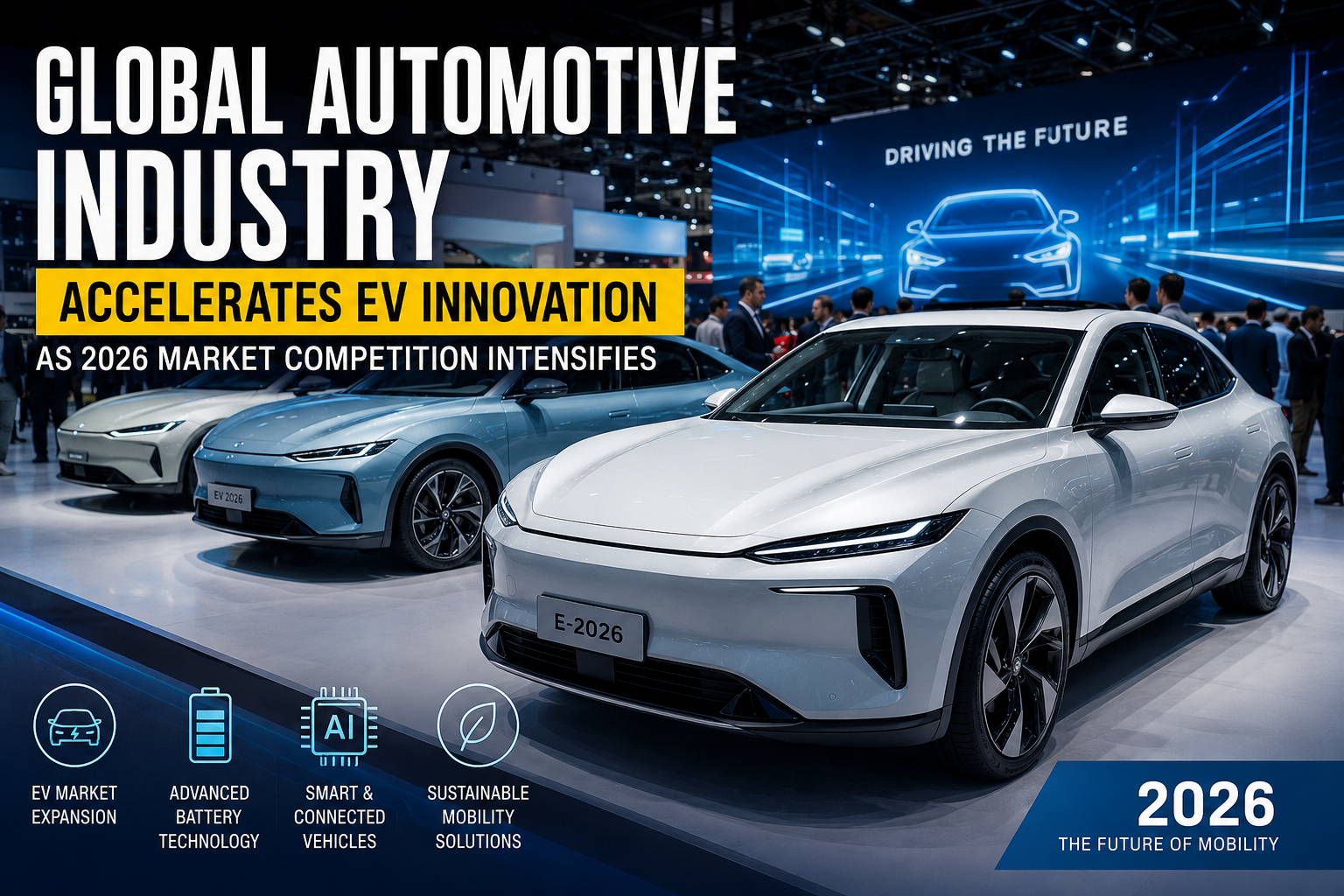
Global Automotive Industry Accelerates EV Innovation in 2026
The global automotive industry continues to undergo one of its biggest transformations in history, driven by rapid electrification, software-defined vehicles, and increasing competition among established manufacturers and emerging EV brands. Throughout 2026, automakers worldwide have intensified investments in electric mobility, intelligent driving technologies, and production expansion to capture growing consumer demand.
Industry experts note that while traditional combustion-engine vehicles remain important in many markets, electric vehicles (EVs) are becoming a major growth driver. Manufacturers are introducing more affordable EV models while simultaneously improving battery efficiency, charging technology, and connected vehicle features. These developments are reshaping customer expectations and accelerating the transition toward cleaner transportation.
Electric Vehicle Competition Reaches a New Level
Competition in the EV sector has become increasingly aggressive as global automakers expand their product portfolios. Chinese manufacturers continue strengthening their international presence with competitively priced electric models, while European, American, Japanese, and Korean brands invest heavily in next-generation platforms and software integration.
Large-scale automotive exhibitions throughout 2026 have showcased hundreds of new vehicles, highlighting innovations in battery technology, intelligent driving systems, and digital vehicle architecture. These events demonstrate how rapidly the industry is evolving toward electrification.
Affordable EVs Drive Consumer Interest
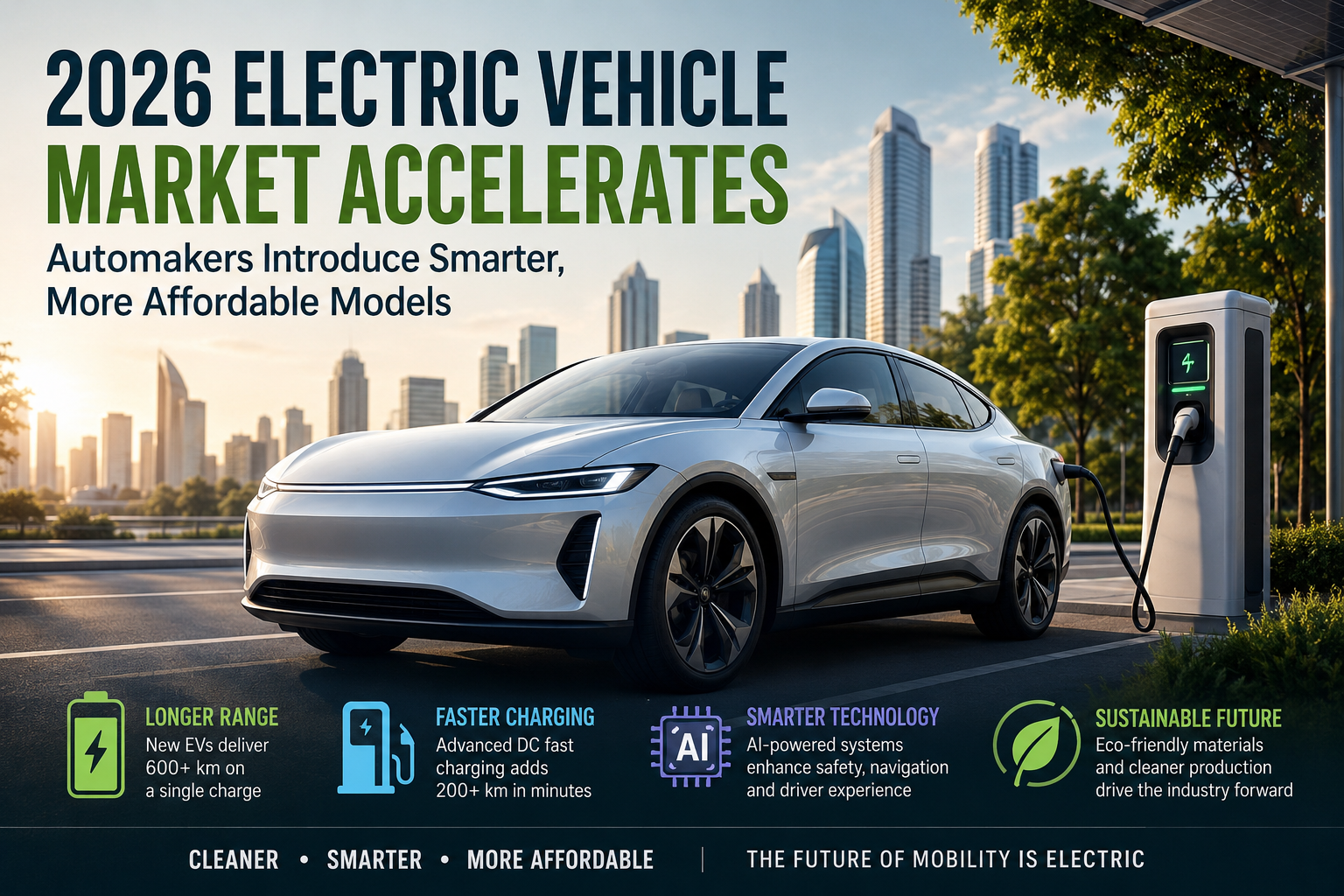
One notable trend this year is the growing availability of affordable electric vehicles. Manufacturers are focusing on reducing production costs while improving driving range and charging efficiency. This strategy aims to attract mainstream consumers who previously viewed EV ownership as too expensive.
Automotive analysts believe that broader model availability will encourage faster EV adoption across both developed and emerging markets.
Software and Smart Technology Become Key Selling Points
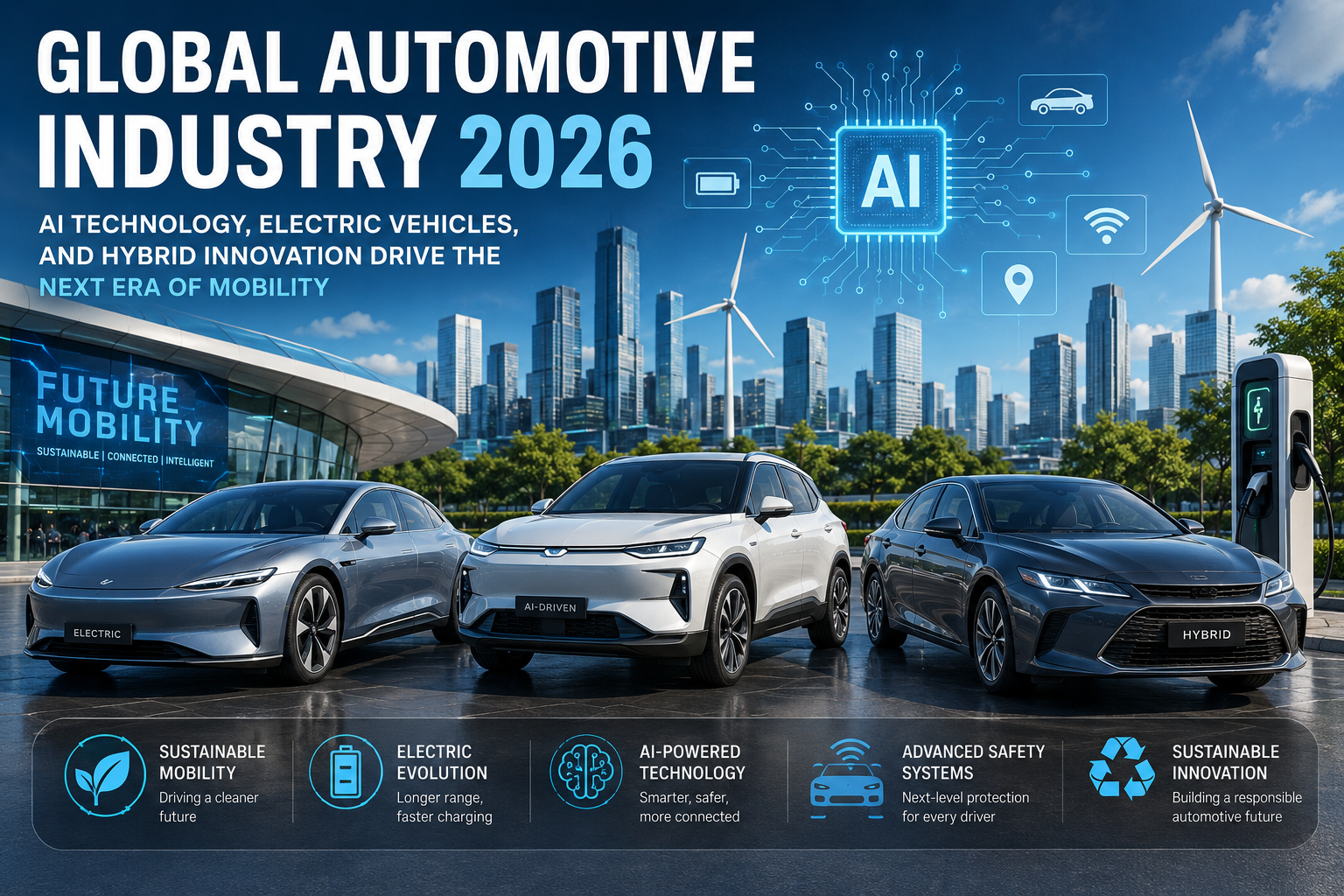
Modern vehicles are no longer judged solely by engine performance. Software capabilities, digital dashboards, artificial intelligence, over-the-air updates, and advanced driver-assistance systems have become essential purchasing considerations.
Connected Vehicles Continue to Expand
Manufacturers are investing heavily in connected vehicle ecosystems that provide seamless smartphone integration, predictive maintenance, cloud-based navigation, and enhanced cybersecurity.
These technologies not only improve driving convenience but also create recurring software-based revenue opportunities for automakers.
Autonomous Driving Research Continues
Although fully autonomous vehicles are still under development in many regions, companies continue testing increasingly advanced driver-assistance technologies. Improved sensors, AI-powered perception systems, and real-time data processing remain priorities for future vehicle development.
Global Production Strategies Continue to Shift
Automakers are also adapting their manufacturing strategies in response to changing market conditions. Many companies are expanding regional production facilities, strengthening supply chains, and investing in battery manufacturing to reduce dependence on overseas suppliers.
At the same time, several manufacturers continue evaluating production capacity and product portfolios to remain competitive in an increasingly dynamic global market.
Leave a Reply